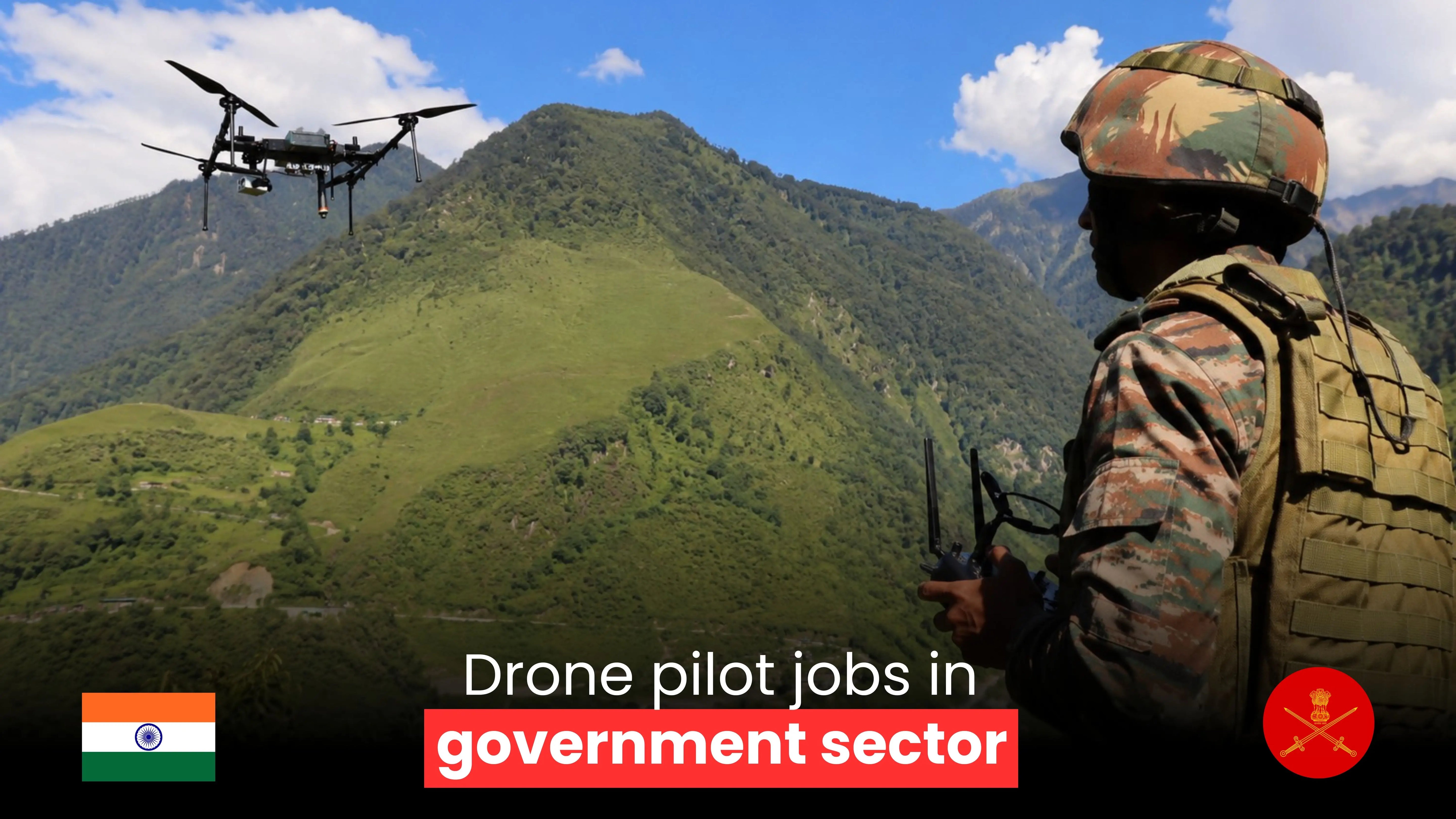

Imagine a military commander monitoring a rapidly evolving battlefield. Intelligence reports are flowing in from multiple directions, enemy positions are shifting, and every second matters. Traditionally, gathering information across a large area would require multiple assets working independently, such as surveillance aircraft, reconnaissance teams, satellites, and individual drones. But what if a single force of hundreds of drones could accomplish the same mission together, communicating continuously, adapting to threats, and making collective decisions in real time?
This is not a scene from a science fiction movie. It is the direction in which modern warfare is heading.
Drone swarms are emerging as one of the most significant military innovations of the 21st century. Unlike conventional unmanned systems that operate individually, swarm drones function as a coordinated network, sharing information and responding collectively to battlefield conditions. As nations race to modernize their armed forces, swarm technology is becoming a strategic priority capable of reshaping how military operations are conducted on land, at sea, and in the air.
From Individual Drones to Collective Intelligence
Military drones have already transformed modern defence operations. They provide intelligence, surveillance, reconnaissance, target acquisition, and force protection capabilities while reducing risks to personnel. However, most current drone missions still rely on individual platforms performing specific tasks under direct human supervision.
Swarm technology introduces an entirely new concept. Instead of operating as separate assets, dozens or even hundreds of drones work together as a single coordinated system. Each drone contributes information to the group while receiving updates from others, allowing the swarm to develop a shared understanding of its environment.
The result is collective intelligence. If one drone detects a threat, the entire swarm becomes aware of it. If another identifies a potential target, that information is instantly distributed throughout the network. The swarm continuously adapts, reorganizes, and optimizes its actions without requiring detailed instructions for every individual platform.
In military terms, this creates a force multiplier capable of delivering greater situational awareness, resilience, and operational effectiveness than traditional unmanned systems.
Why Drone Swarms Matter on the Modern Battlefield
Modern warfare is increasingly defined by speed, information dominance, and adaptability. Commanders are expected to make critical decisions in highly contested environments where threats can emerge without warning.
Drone swarms address this challenge by providing persistent aerial presence across large operational areas. Rather than relying on a single platform that can be tracked, targeted, or neutralized, military forces can deploy an entire ecosystem of drones capable of maintaining surveillance, monitoring troop movements, identifying threats, and supporting mission planning.
Another significant advantage lies in survivability. Traditional military platforms often represent high-value assets whose loss can affect operational effectiveness. Swarms distribute capability across hundreds of units. Even if several drones are lost, the mission continues because the remaining platforms automatically adjust their roles and responsibilities.
This ability to absorb losses while maintaining operational capability makes swarm systems particularly attractive for future military operations where contested environments are expected to become increasingly complex.
How Drone Swarms Could Be Used in Future Military Operations
The future battlefield will demand more than just observation. Military forces will require systems capable of sensing, analyzing, communicating, and responding simultaneously.
Drone swarms could provide continuous intelligence, surveillance, and reconnaissance over vast areas while supporting ground forces with real-time battlefield awareness. They could help identify hidden threats, track enemy movements, establish communication networks in difficult terrain, and create a comprehensive operational picture for commanders.
In high-intensity conflicts, swarms may also be used to confuse and saturate enemy air defence systems by presenting multiple simultaneous targets. By forcing adversaries to divide their attention and resources, drone swarms can create opportunities for other military assets to operate more effectively.
Beyond combat applications, swarm technology has significant value in humanitarian assistance, disaster response, border security, maritime surveillance, and search-and-rescue operations. The same principles that make swarms effective in warfare can also enhance national security and emergency response missions.
India's Growing Interest in Swarm Drone Technology
India has rapidly emerged as one of the leading nations investing in indigenous drone capabilities. Recognizing the changing nature of warfare and the increasing importance of autonomous systems, the Indian Armed Forces have been actively exploring swarm drone technologies for future operational requirements.
One of the most notable demonstrations took place during the Republic Day celebrations in 2021, when a large drone swarm display showcased India's growing expertise in autonomous coordination and swarm management. While the event highlighted technological capabilities, it also demonstrated the country's commitment to developing next-generation unmanned systems domestically.
The Indian Army has been evaluating swarm-based concepts for surveillance, intelligence gathering, force protection, and tactical support missions. Given India's diverse operational environments from high-altitude regions along the northern borders to coastal and desert areas swarm systems offer flexibility that traditional platforms often cannot provide.
Military planners increasingly view swarm drones as valuable assets for monitoring large border areas, conducting reconnaissance missions in difficult terrain, and enhancing situational awareness without exposing personnel to unnecessary risks. These capabilities align closely with India's broader efforts to modernize its defence ecosystem through indigenous innovation and advanced technologies.
Lessons from Real-World Swarm Programs
Around the world, military organizations have been investing heavily in swarm technology research and development.
The United States demonstrated significant progress through programs such as Perdix and LOCUST, where autonomous drones successfully communicated with one another and operated as coordinated formations. These initiatives proved that large groups of drones could make collective decisions and adapt to changing mission requirements without depending on centralized control.
China has also invested extensively in swarm capabilities, conducting demonstrations involving hundreds of coordinated drones. These developments reflect a broader global trend toward autonomous systems capable of operating at scale.
Meanwhile, lessons from contemporary conflicts, particularly the Russia-Ukraine war, have highlighted the growing strategic importance of deploying large numbers of unmanned systems simultaneously. Although many of these operations do not yet represent fully autonomous swarms, they demonstrate how mass drone deployment can influence battlefield outcomes and overwhelm traditional defensive measures.
Together, these examples provide a glimpse into the future direction of military operations, where numbers, coordination, and intelligence may become as important as conventional firepower.
Challenges That Must Be Overcome
Despite their potential, drone swarms are not without limitations.
One of the biggest challenges lies in maintaining secure communication between hundreds of interconnected platforms in contested environments. Adversaries will inevitably attempt to disrupt, jam, or intercept these communications, making resilience a critical requirement.
Cybersecurity presents another significant concern. As autonomy increases, protecting swarm networks from unauthorized access and manipulation becomes essential to ensuring mission success.
Operational and ethical considerations also remain important. Military forces must determine how autonomous systems should be integrated into decision-making processes while ensuring appropriate human oversight. As technology continues to evolve, balancing automation with accountability will remain a key priority for defence organizations worldwide.
These challenges are substantial, but they are not insurmountable. Ongoing advances in artificial intelligence, secure networking, and autonomous navigation continue to push the technology closer to widespread operational deployment.
The Future of Warfare May Belong to the Swarm
Throughout history, military superiority has often been determined by the ability to adapt to technological change. The introduction of tanks, aircraft, precision-guided munitions, and network-centric warfare each transformed the battlefield in their own way.
Drone swarms may represent the next major shift.
The future battlefield is unlikely to be dominated solely by larger platforms or more powerful weapons. Instead, success may increasingly depend on the ability to deploy intelligent systems that can communicate, coordinate, and adapt faster than their adversaries.
For military planners, the question is no longer whether swarm technology will influence future warfare. The question is how quickly nations can integrate these capabilities into their defence strategies.
When hundreds of drones think as one, they become more than individual machines.
They become a collective force capable of changing the very nature of military operations.
Frequently Asked Questions
What is a drone swarm in military operations?
A drone swarm is a group of unmanned aerial systems that operate collectively through autonomous coordination, communication networks, and shared decision-making. Instead of functioning independently, the drones work together as a unified system to achieve mission objectives.
Why are militaries investing in swarm technology?
Military organizations see swarm technology as a force multiplier that can enhance battlefield awareness, improve operational resilience, and support complex missions while reducing risks to personnel and high-value assets.
Is India developing military drone swarm capabilities?
Yes. India has been actively investing in indigenous swarm drone technologies, with the armed forces exploring applications in surveillance, reconnaissance, border security, force protection, and tactical military operations.
Can drone swarms operate without human intervention?
Modern swarm systems can perform many autonomous functions. However, military operations generally maintain human oversight to ensure accountability and mission control.
What makes drone swarms different from traditional drones?
Traditional drones usually operate as individual platforms performing specific tasks. Swarm drones collaborate continuously, share information, adapt collectively to changing conditions, and function as a coordinated network.
Are drone swarms the future of warfare?
Many defence experts believe swarm technology will play a major role in future military operations due to its scalability, flexibility, resilience, and ability to support data-driven decision-making on the battlefield.
Explore Advanced Defence Drone Solutions
As military operations evolve, the demand for intelligent, mission-ready drone platforms continues to grow. From intelligence, surveillance, and reconnaissance missions to force protection and autonomous aerial operations, modern drone technologies are becoming essential tools for defence and homeland security organizations.
At InsideFPV, we are committed to developing advanced drone solutions designed to address the challenges of modern military and security operations. Our platforms are engineered to deliver reliability, operational flexibility, and enhanced situational awareness across diverse mission environments.
Explore our complete range of defence-focused drone solutions