
On February 28, 2026, the US fired a kamikaze drone against Iran in combat for the very first time. The drone it used was a reverse-engineered version of Iran's own Shahed, fired right back at the country that built the original.
That is not ironic. That is the new face of modern warfare, and it is happening right now.
The US-Iran conflict, which erupted under Operation Epic Fury and Operation Roaring Lion in early 2026, has made kamikaze drones the defining weapon of this generation.
In this blog, we will go through a comprehensive breakdown of every major kamikaze drone system in play right now, and what India should be paying attention to.
What Is a Kamikaze Drone? The Basics First
A kamikaze drone, also called a loitering munition or one-way attack drone (OWAD), is a UAV designed to fly into a target and detonate on impact. It does not come back because it is built to die.
Two types are often confused but they work very differently:
- Loitering Munitions: Can circle over a target area for hours, waiting for the right window. The operator can abort mid-flight. Examples: Israeli Harop, American Switchblade.
- One-Way Attack Drones (OWADs): Fly a preprogrammed path autonomously and hit a fixed target. It cannot be recalled. Examples: Iranian Shahed-136, Russian Geran-2.
The reason these weapons are reshaping warfare comes down to one thing: cost asymmetry.
- A Shahed-136 costs $20,000 to $50,000 per unit.
- A US Patriot missile to shoot it down costs roughly $4 million.
- Iran launched hundreds in the first week of the 2026 conflict alone.
When you force your enemy to spend 80 to 200 times more to destroy your weapon than you spent to build it, you are winning economically even when you are losing militarily.
The US-Iran War of 2026: A Quick Context
Here is what happened and why it matters for understanding these drone systems:
- February 28, 2026: US and Israel launched coordinated airstrikes across Iran under Operation Epic Fury, killing Supreme Leader Khamenei and several IRGC commanders.
- Iran's response: Within the first week, Iran fired nearly 941 Shahed drones toward the UAE and 189 ballistic missiles at US bases across the Gulf.
- Scale of attack: Iran was on pace to deploy between 4,000 and 5,000 loitering munitions per month, matching Russia's sustained rate in Ukraine.
- US counter-move: Task Force Scorpion Strike deployed LUCAS drones, America's own low-cost kamikaze system, for the very first time in combat history.
This war has become the most intense real-world test of drone warfare doctrine in history.
Every system covered below has been either deployed in this conflict or is directly shaping how militaries are preparing for it.
Types of Kamikaze Drones at a Glance
Here is a quick reference comparison of every major system covered in this blog:
| Drone | Country | Range | Speed | Warhead | Est. Cost |
|---|---|---|---|---|---|
| Shahed-136 | Iran | ~2,000 km | 185 km/h | 40–50 kg | $20,000–50,000 |
| Shahed-131 | Iran | ~900 km | 185 km/h | 15 kg | ~$15,000 |
| Shahed-238 | Iran | ~1,200 km | 500–800 km/h | 30–40 kg | ~$80,000 |
| Shahed-101 | Iran | ~1,500 km | ~150 km/h | 5–8 kg | ~$10,000 |
| LUCAS / FLM-136 | USA | ~2,000 km | ~200 km/h | ~40 kg | ~$35,000 |
| Switchblade 600 | USA | ~100 km | ~185 km/h | Anti-armor | Classified |
| ALTIUS-600M | USA | ~450 km | ~240 km/h | Modular | Classified |
| IAI Harop | Israel | ~1,000 km | ~220 km/h | 23 kg | ~$1M+ |
| Hero-120 | Israel | ~40 km | ~150 km/h | 4.5 kg (HEAT) | Classified |
| Geran-2 | Russia | ~2,000 km | ~185 km/h | 40–90 kg | ~$50,000 |
| ZALA Lancet | Russia | ~40 km | ~110 km/h | 1–5 kg | Classified |
| FPV Kamikaze | Multiple | ~5–10 km | ~120 km/h | 0.5–2 kg | $200–$800 |
Iranian Kamikaze Drones: The Shahed Family
Iran has built the most extensive low-cost drone arsenal of any non-Western military. The Shahed series, developed by Shahed Aviation Industries under the IRGC, is the backbone of Tehran's drone warfare doctrine.
These are the weapons defining the 2026 conflict.
1. Shahed-136
The Shahed-136 is the most consequential drone of the past decade. This delta-wing, one-way attack UAV with its distinctive piston engine buzz has been heard in Ukraine, the Gulf, and now across the entire Middle East.
- Dimensions: 3.5 m long, 2.5 m wingspan, ~200 kg total weight
- Range: ~2,000 to 2,500 km depending on fuel load
- Speed: ~185 km/h (slow, but that is intentional for range)
- Warhead: 40 to 50 kg high-explosive fragmentation
- Navigation: GPS + GLONASS satellite navigation with inertial backup for GPS-denied zones
- Launch: Rocket-assisted from truck-mounted rails, multiple simultaneous launches
- Cost: $20,000 to $50,000 per unit
The Shahed-136 is dangerous not because of what one drone can do, but because of what 500 of them can do simultaneously. Swarm tactics overwhelm air defense reload cycles and force defenders to burn through $4M interceptors at a catastrophic rate.
2. Shahed-131
The smaller sibling of the Shahed-136, this one is visually similar but notably different in mission role. The easiest way to tell them apart: the Shahed-131 has stabilizers that extend only upward, while the 136 has stabilizers going both up and down.
- Dimensions: 2.6 m long, 2.2 m wingspan
- Range: ~900 km
- Warhead: 15 kg, effective against radar, communications gear, and lightly protected targets
- Navigation: Same GPS and inertial system as the Shahed-136
- Russia deploys this as the Geran-1
It is cheaper to produce, faster to deploy in volume, and specifically sized to get through the gaps in an air defense grid that has been stretched by the larger Shahed-136 waves.
3. Shahed-238
The Shahed-238 replaces the slow piston engine with a turbojet. That single change makes it a fundamentally different threat.
- Speed: 500 to 800 km/h versus 185 km/h for the Shahed-136
- Engine: Turbojet based on Czech PBS TJ150 technology recovered from wreckage
- Tradeoff: Jet engine reduces fuel volume, shortening range compared to the Shahed-136
4. Shahed-101: Silent, Electric, and Harder to Detect
Confirmed in open-source analysis in early 2026, the Shahed-101 introduces an electric propulsion system.
- Dimensions: ~2.5 m with straight wing and X-shaped tail
- Range: Reported up to 1,500 km
- Warhead: 5 to 8 kg, optimized for radar antennas and communications equipment
- Propulsion: Electric motor, drastically lower acoustic signature
- Role: Radar suppression, low-altitude harassment, and mixed-wave swarm support
American Kamikaze Drones: The US Hits Back
5. LUCAS (Low-cost Unmanned Combat Attack System)
LUCAS is the biggest military story of 2026. Developed by US defense startup SpektreWorks, it is openly described as a reverse-engineered Shahed-136.
The US studied Iranian drone debris from Ukraine, built their own version, made it better, and then fired it at Iran.
- Cost: ~$35,000 per unit, a fraction of standard US precision munitions
- Design: V-shaped composite airframe, lightweight, built for rapid mass production
- Launch options: Rocket-assisted ground takeoff, catapult launch, vehicle-mounted systems
- Guidance: Beyond line-of-sight autonomous navigation, some loitering capability
- Combat debut: February 28, 2026, operated by Task Force Scorpion Strike
- Naval test: Successfully fired from a ship in the Persian Gulf in December 2025
- LUCAS proves the US military has accepted the cost-asymmetry lesson Iran taught everyone in Ukraine.
6. AeroVironment Switchblade
The Switchblade family is the most battle-tested Western loitering munition. Tube-launched, folding-wing, operator-guided, and available in multiple sizes for different mission profiles.
It has been used extensively in Ukraine and is actively contributing to operations in the current Iran conflict.
- Switchblade 300 Block 20: Man-portable, single-soldier deployment, updated modular EFP payload for armored targets
- Switchblade 600 Block 2: Long-endurance anti-armor variant, AI-enabled automatic target recognition, encrypted M-Code GPS, Silvus mesh radio networking, IP67-rated for maritime use, relay range exceeding 100 km
- Production ramp: AeroVironment is scaling to 1,200+ units per month at a new Salt Lake City facility opening in early 2027
The Switchblade 600 has human-machine teaming built in. The AI identifies targets. The operator confirms and fires. That keeps legal accountability in human hands while dramatically compressing reaction time.
7. Anduril ALTIUS-600M and 700M
Unveiled at the Paris Air Show in June 2025, the ALTIUS series is Anduril's answer to what a loitering munition looks like when you design it from the ground up around software and AI, rather than bolting intelligence onto a legacy airframe.
- ALTIUS-600M: Extended-range precision strikes, deep integration with Anduril's Lattice AI command and control platform
- ALTIUS-700M: Heavier payload capacity, greater endurance, designed for larger target sets
- Both variants: Modular payload bays that can be configured for kinetic strike, ISR, or electronic warfare
- Network capability: Drone-to-drone coordination, autonomous target handoff across platforms
Israeli Loitering Munitions: The Pioneers of the Category
8. IAI Harop
The Harop, built by Israel Aerospace Industries, is the reference design that most subsequent systems have tried to replicate.
- Mission: Loiters over target area for hours, then dives on high-value targets: radar systems, air defense installations, command posts
- Guidance: Electro-optical sensors plus anti-radiation seeker targeting radar emissions
- Operator control: Human-in-the-loop throughout, abort capability at any point in flight
- Combat proven: Azerbaijan used Harops to destroy Armenian S-300 batteries in 2020
- Range: ~1,000 km, warhead: 23 kg
In the 2026 Iran conflict, Israeli Harops have contributed to suppressing Iranian radar networks ahead of manned aircraft strikes, exactly the SEAD (Suppression of Enemy Air Defenses) role they were designed for.
9. UVision Hero Series
UVision Air has built the most scalable loitering munition family in the Western world.
The Hero series covers an extraordinary range of missions with a unified design philosophy, and US Special Operations Command is an active customer through UVision's American subsidiary.
- Hero-30: ~3 kg, man-portable, anti-personnel and soft target precision strikes
- Hero-120: Mid-range, shaped-charge warhead for defeating armored vehicles
- Hero-400: Heavy anti-armor, penetrating warhead for main battle tanks
- Hero-1250: Strategic anti-armor, the heaviest variant capable of destroying any armored platform
- Launch platforms: Compatible with vehicle-mounted, naval, and man-portable launchers across all variants
The Hero family's modular architecture means a special forces unit and a naval vessel can operate the same family of weapons with shared logistics.
Russian Loitering Munitions: The Geran Family and Beyond
10. Geran-2
Russia's Geran-2 is the same Shahed-136, rebranded and now domestically produced at facilities including the Kupol plant in Izhevsk and a dedicated drone complex in Yelabuga.
Russia has made significant modifications:
- Navigation upgrade: Kometa-M jam-resistant navigation system replacing the original GPS/GLONASS
- Connectivity: Early 2026 variants fitted with Starlink internet for real-time remote control, yes, Elon Musk's satellite network being used on an Iranian-derived Russian kamikaze drone
- Production: Russia can now produce over 1,000 Geran-2 drones per month domestically
- Experimental variants: Ukrainian intelligence identified Geran-2 models carrying small anti-aircraft missile launchers, turning a strike drone into a drone-launched air defense system
- Warhead range: 40 to 90 kg depending on variant and mission
By early 2026, open-source analysis of drone debris found in the UAE suggested Russia may have supplied Geran-2 drones to Iran, a complete reversal of the original technology transfer direction.
11. ZALA Lancet
The Lancet is Russia's domestically designed loitering munition, and it operates on a completely different philosophy from the Geran.
- Guidance: Real-time operator video feed with terminal targeting, can engage moving targets
- Target types: Artillery pieces, radar installations, armored vehicles, command posts
- Variants: Multiple sizes with warheads from 1 to 5 kg
- Proven use: Hundreds of confirmed kills against Ukrainian artillery and Western-supplied equipment in Ukraine
Russia uses Geran drones and Lancets in complementary roles. Gerans saturate and exhaust air defense systems. Lancets eliminate the specific high-value targets that survive.
Together they form a layered offensive doctrine that the US and its allies are now studying intensively.
FPV Kamikaze Drones: The $500 Weapon That Changed Everything
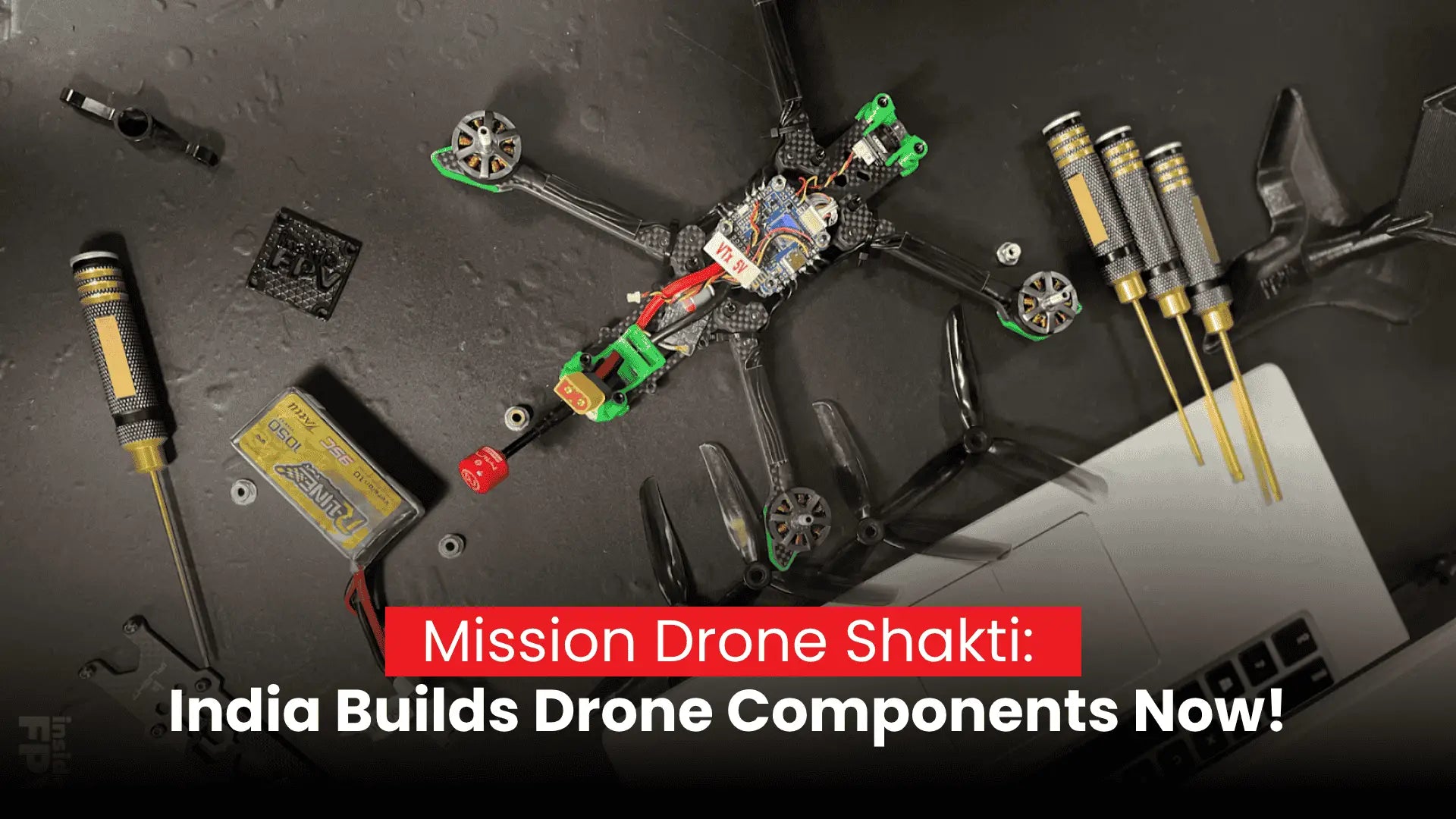
No breakdown of kamikaze drones is complete without FPV. These are commercially available racing drone frames, fitted with a small explosive charge, and flown first-person into a target by an operator wearing FPV goggles.
- Cost: $200 to $800 per unit fully built
- Warhead: 0.5 to 2 kg, effective against personnel, light vehicles, artillery, and supply lines
- Range: 5 to 10 km line-of-sight
- Skill requirement: High, needs trained pilots. But that training takes weeks, not years.
- Scale: Ukraine produces and deploys these in the hundreds of thousands monthly
- Iran-backed militias including Hezbollah and the Houthis have fielded modified FPV drones against US and Gulf targets in the 2026 conflict
5 Lessons the US-Iran War Is Teaching Every Military Right Now
| Lesson | What the 2026 War Proved |
|---|---|
| Cost asymmetry is the weapon | Patriot interceptors cost $4M each. Shahed drones cost $35,000. Iran launched hundreds. The US ran out of interceptors faster than Iran ran out of drones. |
| Swarm > Precision (at scale) | 800 km/h jets can be outmaneuvered by 800 cheap drones. Overwhelming volume forces air defense systems to make impossible choices. |
| Kill the drone before it flies | US CENTCOM struck Iranian launch sites preemptively. Destroying the platform on the ground costs far less than shooting the drone mid-flight. |
| Drones defend against drones | Ukraine proved this in 2024-25. The US and Gulf states are now buying Ukrainian drone interceptors specifically for the Iran war. |
| No tech stays proprietary | Iran copied Israeli drones. Russia copied Iranian drones. The US copied the Russian copy of the Iranian copy. Technology spreads at the speed of debris. |
Conclusion
Warfare is drifting toward something quieter, cheaper, and far more relentless. The center of gravity is no longer a single decisive strike but sustained pressure that never lets up.
Systems that can be built fast, deployed in numbers, and adapted on the fly are starting to outweigh traditional measures of strength. The uncomfortable truth is that the barrier to entry is falling, and once that happens, the pace of change accelerates beyond anyone’s ability to fully control it.
FAQs
Why are kamikaze drones so difficult to defend against?
They combine low cost with high volume, forcing defenders to make expensive decisions repeatedly. Even advanced air defenses can be overwhelmed when too many targets arrive at once.
Are kamikaze drones replacing traditional weapons?
Not entirely. They are being integrated alongside missiles, aircraft, and artillery. Think of them as a new layer that fills gaps rather than a full replacement.
What makes these drones effective despite simple technology?
Effectiveness comes from how they are used, not just how they are built. Coordination, timing, and scale turn relatively basic systems into powerful tools on the battlefield.