
Defence-grade drones are not your everyday flying machines. They are engineered to perform in extreme environments, built with advanced technology, and trusted for missions where reliability is non-negotiable.
Whether used for reconnaissance, combat, or surveillance, a defence-grade drone stands apart from consumer or commercial ones through its construction, endurance, and intelligence.
Let’s break down what truly makes a drone defence grade and why every component, from materials to software, plays a vital role in its battlefield readiness.
Top 10 Things That Makes a Drone Truly “Defence Grade”
Let us understand these points one by one.
Built for Endurance and Tough Environments
A defence-grade drone must survive conditions that would ground a regular drone within minutes. It operates in deserts, mountains, coastal zones, and even high-altitude regions where temperatures fluctuate wildly.
Key factors include:
-
Rugged materials: Carbon fiber and titanium frames resist impact, heat, and corrosion.
-
Weather resistance: Sealed electronics and IP-rated designs protect against dust, moisture, and rain.
-
Long flight endurance: Extended battery life or hybrid engines allow for continuous missions lasting hours instead of minutes.
These features make defence drones indispensable during long-range reconnaissance or critical rescue missions.
Also read: How to choose the right defence drone for your mission
Advanced Navigation and GPS Denial Capability
In modern warfare, GPS jamming is common. A true defence-grade drone must navigate even when GPS signals are compromised.
Core capabilities include:
-
Inertial Navigation Systems (INS): Allow autonomous operation without GPS input.
-
Visual Simultaneous Localization and Mapping (V-SLAM): Enables mapping and obstacle avoidance in real time.
-
Redundant sensors: Ensure continuous data even if one system fails.
These systems allow defence drones to operate behind enemy lines or in electronic warfare zones with precision.
Encrypted Communication and Secure Control Links
Security is the backbone of any military asset. Defence-grade drones use encrypted communication systems that prevent interception or hijacking.
Typical features include:
-
End-to-end data encryption for live video and telemetry.
-
Frequency hopping spread spectrum (FHSS) to evade jammers.
-
Dedicated military frequencies for uninterrupted connectivity.
This ensures that the drone’s commands and video feed remain secure even under hostile interference.
Also read: insideFPV drones dominate army trials at Babina ranges
AI-Powered Autonomy and Target Identification
Defence drones increasingly rely on artificial intelligence for decision-making, object detection, and real-time analysis. This allows them to act faster and more efficiently in mission-critical situations.
Key functions:
-
Automatic target recognition (ATR): Identifies enemy assets using onboard cameras and sensors.
-
Adaptive flight algorithms: Adjust to weather, terrain, and mission needs.
-
Swarm intelligence: Enables multiple drones to coordinate like a single system.
This autonomy reduces pilot workload and enhances mission precision.
Payload Versatility and Modular Design
Defence-grade drones are built to adapt to diverse missions, from surveillance to combat. Their modular architecture allows quick swapping of payloads.
Common payloads include:
-
High-resolution thermal and optical cameras for surveillance.
-
Electronic warfare modules for jamming enemy communications.
-
Weapon systems such as micro-munitions or guided projectiles (for combat variants).
This versatility ensures that one platform can serve multiple mission types efficiently.
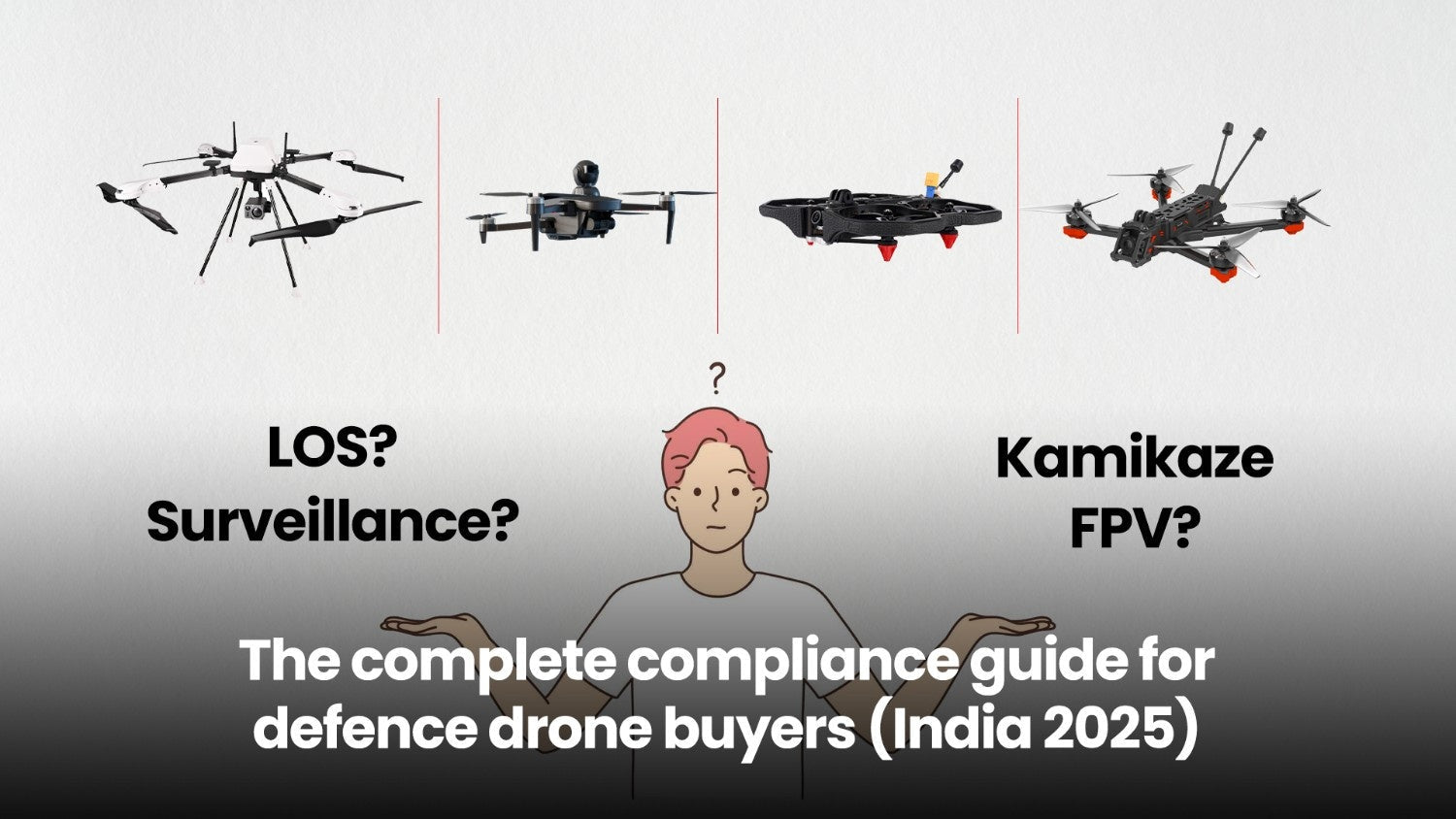
Also read: Complete compliance guide for defence drone buyers
Stealth and Low Observability
Being unseen is often more powerful than being fast. Defence drones are designed with stealth in mind, both visually and electronically.
Core stealth elements:
-
Low radar cross-section (RCS) through smooth composite surfaces.
-
Noise reduction technology to minimize acoustic signatures.
-
Infrared suppression systems to avoid heat-based detection.
These features help drones carry out covert operations without alerting radar or thermal sensors.
Long-Range Data Transmission and Satellite Integration
Defence-grade drones often operate far from command centers. Reliable data transmission becomes critical in such missions.
Advanced communication tech includes:
-
SATCOM (Satellite Communication): Enables real-time global command and control.
-
Multi-band radio systems: Switch seamlessly between frequencies for uninterrupted communication.
-
Cloud-linked mission analytics: Allow commanders to access and analyze data instantly.
This connectivity ensures smooth coordination across land, air, and sea forces.
Tested for Military Standards and Certifications
A drone is considered defence grade only when it passes rigorous testing under global military standards.
Key standards include:
-
MIL-STD-810G: Tests resistance to temperature, shock, vibration, and humidity.
-
EMI/EMC compliance: Ensures electromagnetic compatibility with other defence systems.
-
Reliability trials: Assess long-term performance under simulated combat conditions.
These certifications validate that the drone is mission-ready and can be trusted by armed forces.
Indigenous Manufacturing and Supply Chain Security
In today’s geopolitical climate, origin matters. Defence-grade drones are increasingly produced domestically to ensure supply chain transparency and national security.
Why it matters:
-
Reduces dependence on foreign parts that may pose cybersecurity risks.
-
Strengthens local defence manufacturing ecosystems.
-
Enables customisation based on the country’s specific tactical needs.
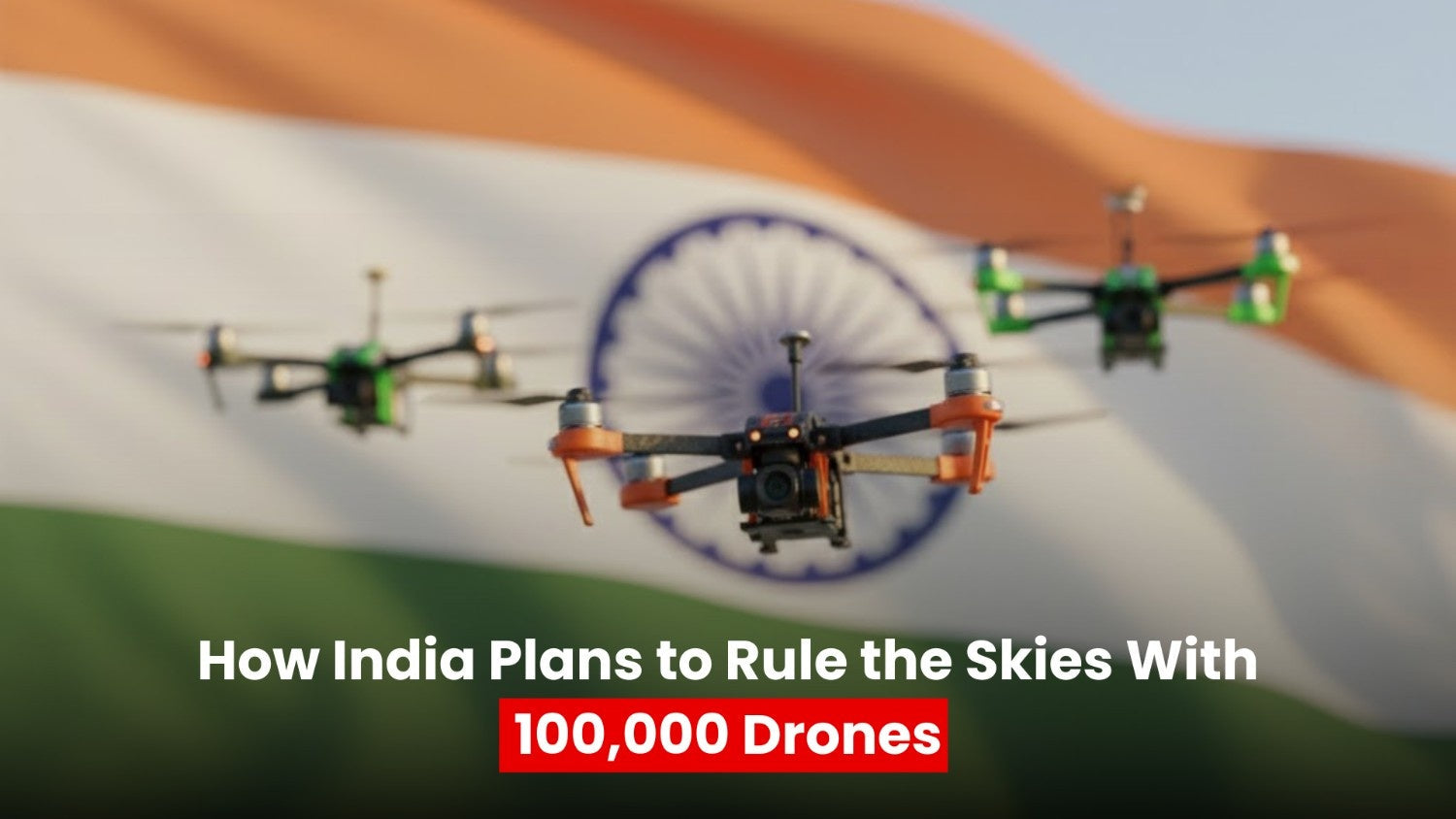
India, for example, is promoting indigenous defence drone production under the Make in India initiative, with companies like InsideFPV leading the charge.
Real-Time Battlefield Integration
Modern defence drones are not standalone tools; they are part of an integrated digital battlefield.
They connect with:
-
Ground control stations for live intelligence.
-
Command and control (C2) networks for coordinated action.
-
Combat management systems for real-time target tracking and data sharing.
This integration transforms drones from mere eyes in the sky to active participants in network-centric warfare.
Conclusion
A defence-grade drone is not defined by a single feature but by the harmony of endurance, intelligence, security, and adaptability. It must be rugged enough to endure war zones, smart enough to operate autonomously, and secure enough to resist cyber threats.
As military technology evolves, the next generation of defence drones will likely merge AI-driven decision-making with quantum communication and autonomous swarm systems, thus reshaping the very definition of air superiority.
FAQs
What is the difference between a commercial drone and a defence-grade drone
Commercial drones are designed for photography or logistics, while defence-grade drones are built for military applications involving reconnaissance, surveillance, or combat. They feature advanced encryption, rugged materials, and longer endurance.
Can defence-grade drones be used for civilian purposes?
While the technology can be adapted, most defence-grade drones are restricted due to national security regulations. Some components, like navigation systems or sensors, may find use in industrial or disaster management sectors.
How are defence-grade drones tested before deployment?
They undergo military-standard testing for weather resistance, vibration, shock, and communication reliability. Only after passing all certifications are they cleared for active duty.
Which countries lead in defence drone manufacturing?
The United States, Israel, China, and India are among the leading nations producing advanced defence-grade drones. India’s emerging ecosystem is quickly gaining global attention due to indigenous innovation.