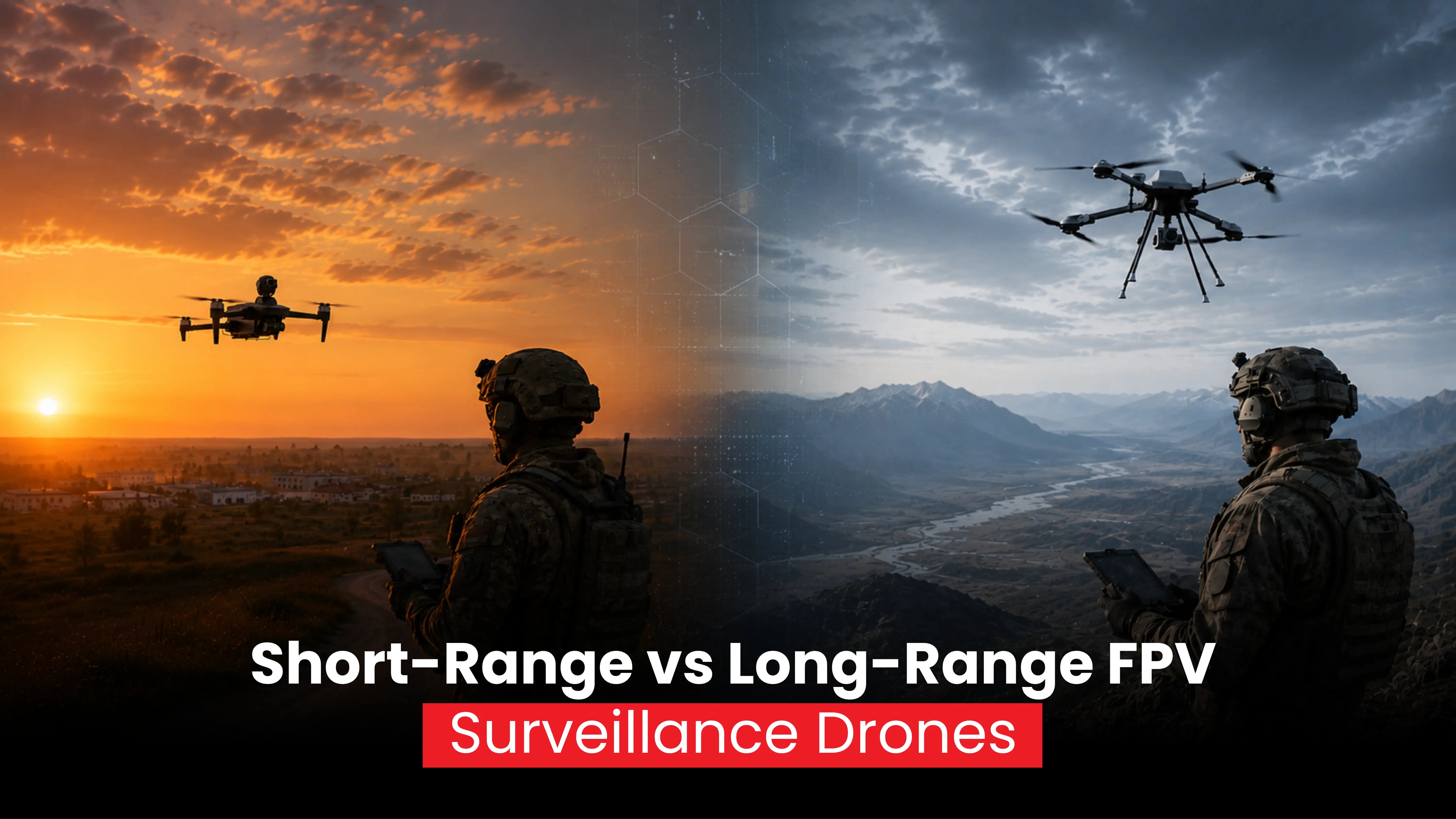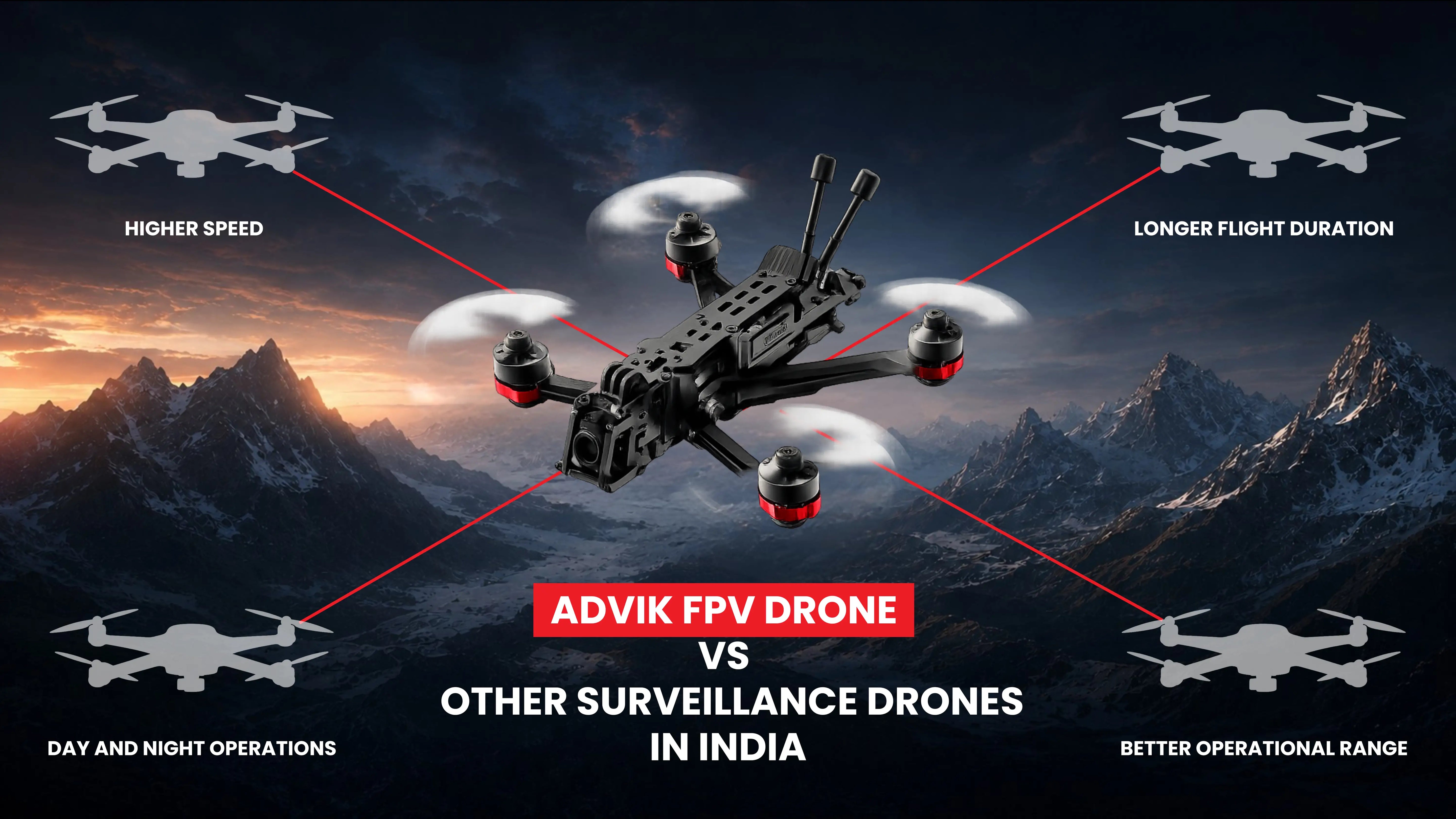

Contemporary warfare is increasingly defined by speed, adaptability, and real-time intelligence. In today’s operational environment, the ability to deploy an aerial surveillance platform within seconds can directly influence mission success. Whether it is border monitoring, urban reconnaissance, convoy protection, or rapid-response operations, defence forces now require drone systems that can be launched immediately with minimal preparation.
This is where quick-deploy drones have become strategically important.
A quick-deploy drone is designed for immediate operational readiness. Unlike conventional drone systems that may require lengthy setup, calibration, or launch preparation, these platforms are engineered to provide instant aerial reconnaissance in dynamic environments where every second matters.
Over the last few years, global conflicts have clearly demonstrated that rapid-deployment drone systems are no longer support tools - they are frontline tactical assets.
What is a Quick-Deploy Drone?
A quick-deploy drone is a portable unmanned aerial system designed for fast launch capability, rapid situational awareness, and minimal operational setup time.
These systems are typically built around:
-
Compact field-portable architecture
-
Rapid launch readiness
-
Lightweight tactical mobility
-
Real-time surveillance capability
-
Minimal operator dependency
Many modern systems can be deployed directly from portable cases, backpacks, vehicle mounts, or tube-launch systems within seconds.
The primary objective is simple, provide immediate aerial intelligence without slowing down operational movement.
Why Quick Deployment Matters in Modern Warfare
Traditional reconnaissance methods often consume valuable time and expose personnel to unnecessary risk. Quick-deploy drones solve this problem by allowing troops to gain immediate visibility before movement or engagement.
In tactical operations, this provides several critical advantages:
-
Faster battlefield awareness
-
Immediate terrain assessment
-
Reduced operator exposure
-
Rapid threat identification
-
Improved mission planning
Modern conflicts have shown that real-time reconnaissance capability at the squad and platoon level can significantly improve operational effectiveness.
Lessons from the Russia–Ukraine War
The Russia - Ukraine conflict has fundamentally changed the way militaries view tactical drones.
Quick-deploy FPV drones, compact reconnaissance UAVs, and portable loitering systems have become central to frontline operations. Small drone teams are now routinely used for:
-
Immediate reconnaissance
-
Urban combat surveillance
-
Rapid target acquisition
-
Artillery correction
-
Convoy overwatch
Ukraine has also increasingly deployed portable FPV systems capable of being launched quickly near active combat zones. Recent battlefield reports show how mobile drone units are being integrated directly into frontline tactical operations rather than operating separately from ground forces.
One of the clearest examples is the growing use of compact reconnaissance drones like the Black Hornet nano-drone. These ultra-light systems provide soldiers with immediate aerial visibility in urban environments and confined spaces. Reports indicate that hundreds of these systems were deployed in Ukraine for close-range reconnaissance and tactical overwatch operations.
The war has demonstrated a major shift in military doctrine:
Fast and portable aerial intelligence is now essential at the tactical unit level.
The Black Hornet Example: Pocket-Sized Tactical Reconnaissance
One of the most widely discussed quick-deploy military drones globally is the Black Hornet nano-drone.
Small enough to fit in the palm of a hand, the Black Hornet is designed for rapid reconnaissance in close-quarter environments. It has been used by military units for:
-
Building clearance reconnaissance
-
Urban surveillance
-
Around-corner visibility
-
Tactical overwatch
-
Immediate threat assessment
The system has seen operational deployment with British forces in Afghanistan and later in Ukraine for urban combat reconnaissance.
Its importance lies not in endurance or payload capacity, but in the ability to provide instant situational awareness without exposing troops directly to threats.
This reflects the core philosophy behind quick-deploy drone systems:
Launch fast. Gather intelligence instantly. Reduce uncertainty.
Rapid Deployment in Urban Combat
Urban warfare creates some of the most challenging operational environments for defence forces.
Buildings, narrow streets, blind corners, and limited visibility increase tactical risk significantly. Quick-deploy drones allow operators to gain immediate aerial awareness before advancing into uncertain zones.
In recent conflicts, compact reconnaissance drones have been used to:
-
Scan rooftops
-
Monitor alleyways
-
Identify enemy movement
-
Clear structures remotely
-
Support close-quarter tactical teams
The use of nano and micro-drone systems in urban combat environments has grown rapidly because they provide low-risk intelligence collection without slowing operational movement.
Tactical Advantages of Quick-Deploy Drones
Quick-deploy drones provide immediate aerial intelligence in situations where response time is critical. Their ability to launch within seconds allows operators to assess terrain, monitor threats, and gather real-time reconnaissance without delaying operations.
These systems also help reduce direct exposure for troops by enabling remote surveillance before entering uncertain areas. Their lightweight and portable design allows tactical units to carry and deploy them directly in the field, improving operational mobility and battlefield awareness.
Because of their adaptability, quick-deploy drones can support multiple defence applications, including reconnaissance, perimeter monitoring, convoy protection, and rapid-response missions.
The Rise of Portable FPV Systems in Tactical Operations
FPV drone technology has also evolved rapidly in modern combat scenarios.
Recent conflicts have shown how agile FPV platforms can support:
-
Fast reconnaissance missions
-
Low-altitude surveillance
-
Precision tactical operations
-
Rapid-response deployment
Even non-state actors and irregular forces have increasingly adapted portable FPV drone systems because of their low cost, mobility, and rapid deployment capability. Recent defence reports have highlighted the growing use of compact fibre-optic FPV drones in modern conflict zones due to their resistance to electronic warfare systems.
This shift demonstrates how rapidly deployable drone technology is reshaping tactical battlefield operations globally.
Why Defence Forces Are Prioritizing Quick-Deploy Systems
Modern defence strategy is increasingly focused on distributed operational capability rather than centralized systems alone.
This means frontline units now require:
-
Organic reconnaissance capability
-
Immediate aerial intelligence
-
Portable surveillance systems
-
Fast-response drone deployment
-
Flexible mission adaptability
Quick-deploy drones fit directly into this evolving operational model.
Rather than waiting for external surveillance support, tactical teams can now launch, monitor, and respond independently in real time.
The Future of Quick-Deploy Defence Drones
As defence technology continues to evolve, quick-deploy drones are expected to become even more integrated into frontline operations.
Future systems will likely focus on:
-
Faster launch times
-
Autonomous reconnaissance assistance
-
Improved low-light capability
-
Better electronic warfare resistance
-
Enhanced portability
-
Multi-role payload adaptability
The core objective, however, will remain unchanged:
Deliver immediate battlefield awareness with minimal delay.
Frequently Asked Questions (FAQs)
What is a quick-deploy drone?
A quick-deploy drone is a portable drone system designed for immediate operational readiness with minimal setup time, allowing rapid aerial surveillance and reconnaissance.
Why are quick-deploy drones important in defence operations?
They improve response time, situational awareness, reconnaissance capability, and operator safety during tactical missions.
What is the Black Hornet drone?
The Black Hornet is a nano reconnaissance drone designed for close-range tactical surveillance. It has been used in Afghanistan and Ukraine for urban reconnaissance and troop support operations.
Can quick-deploy drones support thermal imaging?
Yes. Many defence-focused quick-deploy drones support thermal cameras, night vision payloads, and real-time reconnaissance systems.
What are the main use cases of quick-deploy drones?
Border surveillance, tactical reconnaissance, urban operations, convoy protection, disaster response, and rapid aerial intelligence gathering.
Explore Mission-Ready Drone Technology
Modern operational environments demand drone systems that can launch quickly, adapt instantly, and deliver reliable aerial intelligence under pressure.
InsideFPV develops advanced tactical drone technologies focused on rapid deployment, operational flexibility, and mission-ready performance for modern defence applications.
Visit InsideFPV to explore next-generation defence drone platforms built for real-world operational requirements.