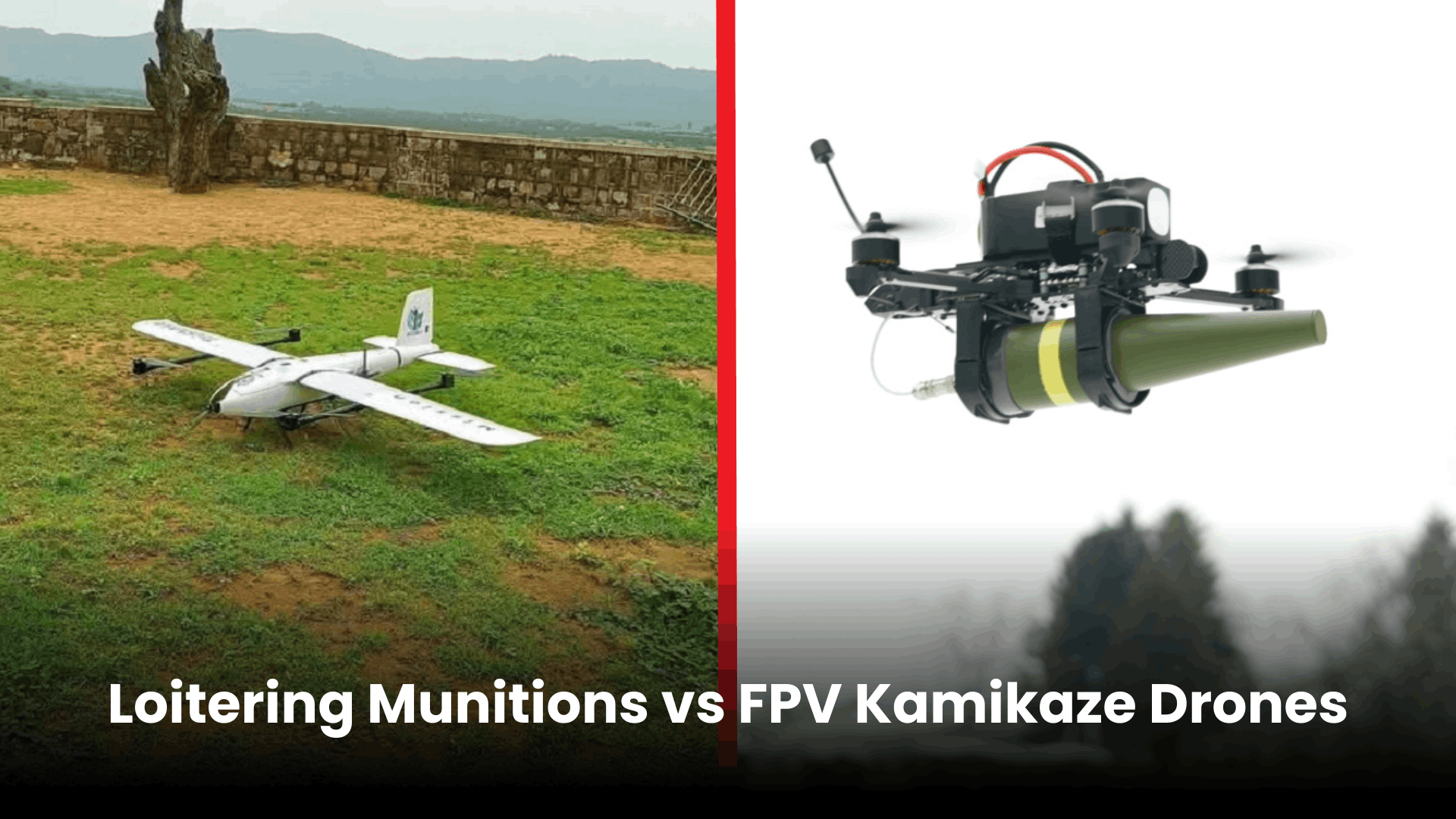

How Has Drone Warfare Crossed a Historic Threshold?
What began as a simple surveillance aid has evolved into one of the most decisive instruments of modern warfare. Across recent conflicts from the Russia-Ukraine war to the rising tensions in South Asia drones have shifted from supporting tools to primary combat assets that shape battle outcomes, national strategies, and defence policies.
For India, this transformation underscores an urgent message: strategic independence in drone technology is essential. At InsideFPV, this understanding drives continuous innovation and capability development aligned with India’s long-term defence vision.
Why Do Drones Sit at the Center of Modern Warfare?
Modern battlefields reward speed, precision, adaptability, and cost-efficiency and drones deliver all four.
Unlike traditional aircraft, drones can fly at low altitudes to evade radar, stay airborne for extended durations, and be replaced quickly when lost. Their expanding capabilities now extend far beyond surveillance.
Key Roles Drones Now Play in Conflict
-
Real-time battlefield surveillance and mapping
-
Precision strikes using loitering munitions
-
Swarm attacks designed to overwhelm defences
-
Tactical logistics and cargo delivery in war zones
-
Naval operations via unmanned surface vehicles
-
Electronic warfare and suppression of air defences
These roles enable even smaller or resource-constrained forces to challenge traditional military superiority, changing the calculus of power on the battlefield.
What Lessons Does the Russia–Ukraine War Offer for India?
The Russia–Ukraine war redefined how nations perceive drone warfare. Initially, Ukraine relied heavily on imported commercial drones, particularly from China. But as supply chains faltered under geopolitical strain, Ukraine swiftly pivoted to domestic production.
Within months, Ukraine began producing millions of drones annually, ranging from FPV (First-Person View) drones to long-range strike systems. Civilian drones were repurposed for intelligence, targeting, and even direct assault.
Two Key Lessons from Ukraine’s Experience
-
Manufacturing control outweighs access to finished systems.
-
Flexibility and rapid iteration outperform expensive, slow-moving platforms.
For India, the takeaway is clear: dependence on foreign suppliers during a crisis could cripple national readiness and response capability.
How Are Drones Transforming Naval Warfare?

Image generated by AI using OpenAI’s GPT-5 image system. Created exclusively for illustrative and editorial purposes.
Naval operations are undergoing a quiet revolution. Unmanned systems now play critical roles in maritime surveillance, anti-submarine warfare, and port defence.
Ukraine’s innovative use of naval drones in the Black Sea disrupted Russian naval dominance despite Ukraine’s limited traditional fleet. Similarly, major powers are developing autonomous underwater and surface vehicles to enhance naval flexibility and reduce risk.
For India, with its vast coastline and vital maritime trade routes, developing indigenous naval drones is not just a strategic advantage. It’s a necessity for coastal defence, deterrence, and long-term maritime security.
What Can India Learn from Turkey and China’s Drone Success?
Both Turkey and China have become global drone powerhouses through distinct approaches:
-
Turkey built a strong public-private ecosystem, nurturing domestic firms like Baykar to meet national defence needs before scaling exports globally.
-
China, meanwhile, dominates the commercial drone market, controlling a large share of the global supply chain and exporting both military and dual-use platforms.
This dominance, however, creates dependency risks for other nations. For India, over-reliance on Chinese systems could lead to supply disruptions or strategic vulnerabilities during times of conflict.
Transform Your Defence Strategy with Indigenous Drones
At InsideFPV, we design and build advanced drones made in India — tailored for real-world defence, surveillance, and tactical operations. Experience precision, autonomy, and innovation powered by indigenous engineering.
Explore Our Drone SolutionsHow is Drone Warfare Evolving in South Asia?
Recent India–Pakistan tensions have demonstrated how drone warfare has entered the regional battlefield.
Pakistan deployed large swarms of drones, leveraging foreign technology, while India responded with precision strikes and layered air-defence systems.
Key Takeaways from India–Pakistan Engagement
-
Numbers alone don’t determine success.
-
Integrated systems outperform isolated operations.
-
Precision, coordination, and real-time intelligence matter more than saturation tactics.
India’s effective interception rate underscored the power of layered counter-drone defences, revealing how discipline and technology integration outclass volume-based attacks.
What Progress Has India Made in Drone Development?
India has made significant strides in drone technology through policy reforms and innovation-driven initiatives like the Production Linked Incentive (PLI) scheme and Drone Shakti mission.
Key Advances in the Indian Drone Ecosystem
-
Development of indigenous loitering and MALE drones (Medium Altitude Long Endurance)
-
Public-private partnerships in drone manufacturing
-
Naval unmanned systems for maritime surveillance
-
Startup-led innovation in sensors, payloads, and autonomous navigation
However, challenges remain particularly in achieving cost competitiveness and reducing dependence on imported electronic components and propulsion systems. True self-reliance will require end-to-end domestic supply chains.
Why Are Counter-Drone Systems Equally Important?
The growing accessibility of drone technology brings a new threat: non-state actors.
Commercial drones costing a few thousand dollars can be easily modified for surveillance, smuggling, or even attacks. Militant groups and criminal networks have already begun exploiting this low-cost technology.
Factors Fueling This Threat
-
Weak international regulation of drone sales
-
Availability of dual-use commercial drones
-
Ease of modification and weaponization
Therefore, counter-drone systems including radar detection, radio-frequency jamming, and kinetic interceptors are now critical for national security, especially in border zones, urban centers, and around critical infrastructure.
What is the Strategic Road Ahead for India?
The central lesson from global conflicts is undeniable: drone warfare evolves faster than traditional procurement systems. Nations that control design, manufacturing, and iteration cycles retain operational freedom and adaptability.
For India, indigenisation is not isolation it’s resilience. Building drones domestically ensures faster upgrades, better integration with local doctrines, and reduced vulnerability to shifting geopolitical alliances.
At insideFPV, this philosophy defines our approach prioritizing indigenous design, real-world adaptability, and mission-specific innovation.
Building drones in India isn’t just an industrial goal.
It’s a strategic necessity for securing the nation’s autonomy in the age of drone warfare.
Frequently Asked Questions (FAQs)
1. Why is indigenous drone manufacturing important for India?
It ensures supply security during conflicts, supports rapid upgrades tailored to India’s defence needs, and reduces dependence on foreign technology.
2. How did the Russia–Ukraine war change the perception of drones?
It showcased how drones could redefine warfare across all domains and demonstrated the effectiveness of local production under crisis conditions.
3. Are drones replacing traditional fighter aircraft?
No. Drones complement manned aircraft by offering affordable precision, persistence, and reduced risk in contested or high-threat environments.
4. What are counter-drone systems and why are they vital?
Counter-drone systems detect, track, and neutralize rogue drones—protecting both civilian and military assets from surveillance or attacks.
5. How is India fostering innovation in drone technology?
Through startup support, government incentives, and collaboration between defence PSUs and private firms to boost domestic R&D.
6. What’s the biggest challenge to India’s drone self-reliance?
Dependence on imported electronic components and propulsion systems remains a major bottleneck, requiring focused supply chain development.
External Reference:
For deeper insights, visit NatStrat Research — a leading think tank analyzing India’s evolving defence strategy.