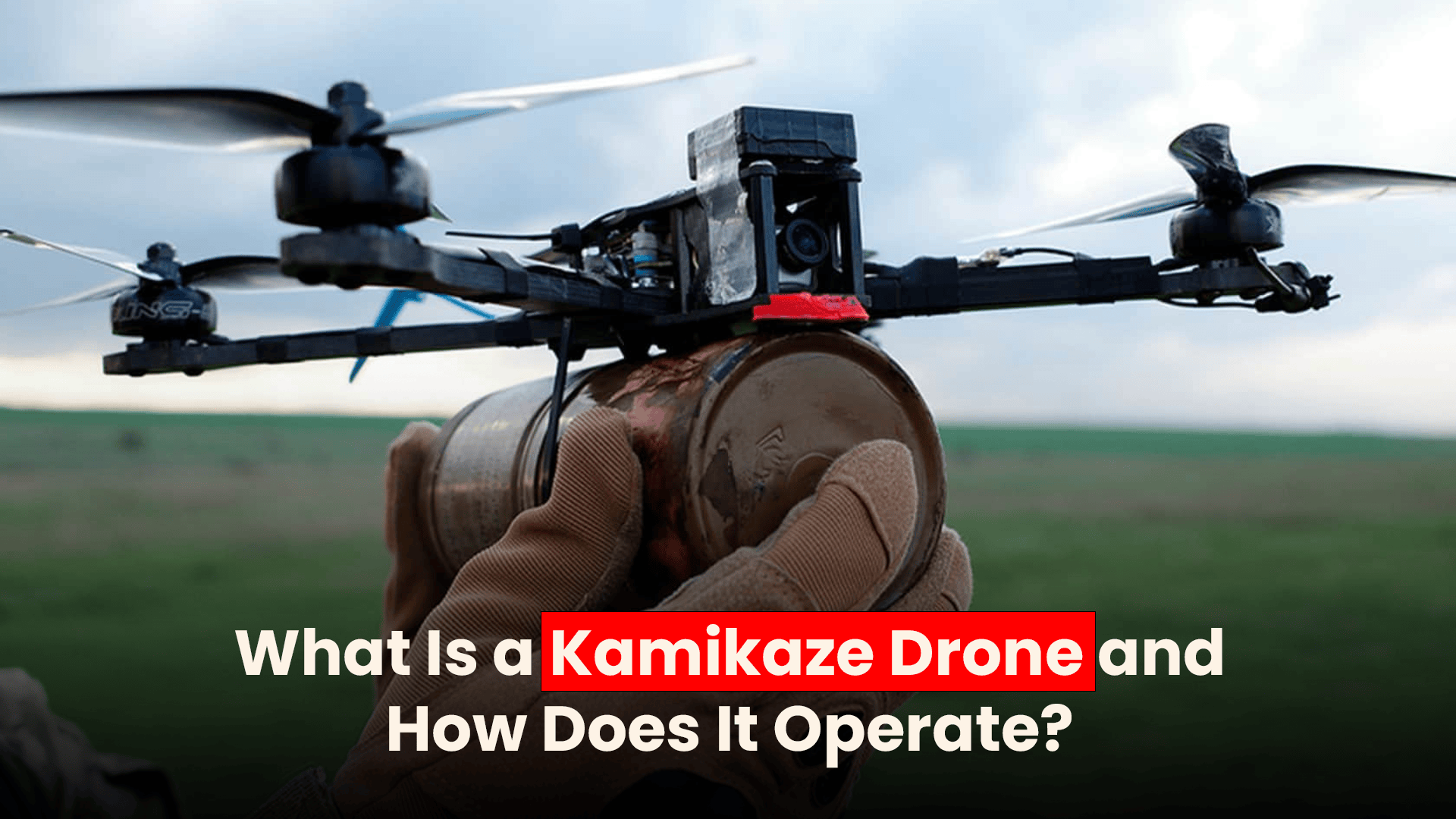

There is Drone arms race unfolding right now that most people are not paying enough attention to. And unlike many global military competitions, this one is happening directly on India’s borders.
Pakistan reportedly downed 88 Indian drones during the May 2025 conflict, exposing gaps in India's offensive drone capability. At the same time, China has ordered over one million military drones for deployment by 2026, while Iran is demonstrating how cheap, mass-produced drones can overwhelm even the most advanced air defence systems.
The question is no longer whether drone warfare will shape future conflicts.
The real question is whether India is moving fast enough to compete in the global drone arms race.
The Global Drone Arms Race Explained
The Drone arms race refers to the rapid global competition to build, deploy, and scale military drones, loitering munitions, and autonomous UAV systems.
Unlike traditional arms races centered on fighter jets or nuclear weapons, drone warfare is defined by:
-
Mass production
-
Low cost
-
Rapid deployment
-
Attrition-based warfare
Countries that can manufacture thousands of drones quickly gain a major strategic advantage.
Today, three regions are shaping the future of this race:
-
Middle East
-
Eastern Europe
-
South Asia
And India sits at the center of one of the most important drone competition zones in the world.
Operation Sindoor — The Conflict That Exposed India's Drone Gap
Most people remember Operation Sindoor as the strike targeting terrorist infrastructure inside Pakistan.
What received far less attention was the drone warfare phase that followed.
Pakistan responded with Operation Bunyan al-Marsus, deploying Turkish-origin:
-
YIHA-III combat drones
-
Asisguard Songar armed UAVs
These drones were launched across a 1,700 km front, targeting 36 locations in a single night.
The goal was not destruction.
It was battlefield probing.
Pakistan forced India to:
-
activate radar networks
-
deploy interceptor missiles
-
reveal gaps in drone defence systems
India successfully intercepted around 90% of incoming drones.
However, Pakistan simultaneously shot down 88 Indian drones, exposing weaknesses in India's offensive drone deployment strategy.
Pakistan also used decoy radar systems to lure Harop loitering munitions into extended flight times, forcing them to descend below 3,000 feet, where they became easier targets.
The takeaway was clear.
India has strong defensive capabilities but must significantly improve:
-
drone production scale
-
offensive swarm capability
-
drone warfare doctrine
What Iran Is Proving in the Modern Drone Arms Race
Since February 2026, Iran has been demonstrating a powerful strategy in drone warfare.
Iran launched waves of Shahed-136 kamikaze drones targeting US military assets across the Gulf.
Most drones were intercepted.
But interception itself created the strategic problem.
|
Weapon |
Cost Per Unit |
|
Shahed-136 Drone |
~$20,000 |
|
Patriot Interceptor |
$3M – $4M |
|
THAAD Interceptor |
$10M+ |
This cost imbalance creates drone warfare economics.
Every $20,000 drone forces defenders to fire interceptors worth hundreds of times more.
The United States produced only 12 THAAD interceptors in the last fiscal year.
At current engagement rates, replenishing interceptor stockpiles could take years or even decades.
If a similar strategy were used along India’s western border, the economics would look strikingly similar.
Pakistan demonstrated during the 2025 conflict that it could assemble drones in 72-hour cycles.
A sustained campaign at that tempo would drain even well-prepared missile defence systems.
China Factor in the Drone Arms Race
The People’s Liberation Army (PLA) has reportedly ordered over one million military drones for deployment by 2026.
These include:
-
AI-enabled swarm drones
-
loitering munition UAVs
-
stealth reconnaissance platforms
-
anti-tank kamikaze drones
China’s military drone market was valued at nearly $5 billion in 2025 and is expected to double by 2033.
The challenge for India is further complicated by China’s military-civil fusion model.
China operates nearly two million civilian drones, many of which can be repurposed for military roles during wartime.
Additionally, China directly supplies Pakistan with drones such as the Wing Loong II, capable of carrying over 300 kg of munitions per sortie.
China has also introduced the Jiu Tian drone mothership, designed to deploy swarms of smaller drones mid-flight, extending operational range dramatically.
India currently operates around 50 MALE drones, primarily Israeli-origin Herons used for surveillance.
China is building towards a fleet measured in millions.
Closing that gap requires industrial scale manufacturing, not just procurement announcements.
What India Is Doing to Compete in the Drone Arms Race
India has taken several important steps since the 2025 conflict.
Major Developments in India's Drone Strategy
-
₹5,000 crore Indian Army drone procurement orders (2025)
-
$234 million drone industry incentive programme
-
19 military drone training centres being established
-
Drone platoons in every infantry battalion
-
The BSF School of Drone Warfare
-
Counter-drone systems integrated into artillery units
-
Tri-service UAV war game Cold Start (2025)
These initiatives show that India is moving toward a drone-centric battlefield doctrine.
The Eagle in the Arm Doctrine
The most significant strategic shift in India’s drone policy is the Eagle in the Arm doctrine, introduced by Army Chief General Upendra Dwivedi.
This concept redefines what a modern soldier is.
Instead of being only a rifleman, every soldier becomes:
-
a drone operator
-
a field technician
-
a battlefield engineer
In high-intensity combat, a single Army Corps may require 1,500–2,000 drones per day.
Traditional procurement cannot sustain that scale.
The solution being explored is decentralised drone production, where units can:
-
repair drones in the field
-
assemble new drones locally
-
potentially 3D-print replacement components
India has begun implementing this concept through:
-
Ashni Platoons in 380+ infantry battalions
-
Bhairav Battalions for large-scale drone operations
Each Ashni unit operates roughly 10 drones for surveillance and strike missions.
Three Strategic Priorities India Must Fix in the Drone Arms Race
1. Secure the Drone Supply Chain
India still depends heavily on China for:
-
drone motors
-
lithium batteries
-
rare-earth magnets
-
electronic components
This creates a major national security vulnerability.
Diversifying supply chains is essential.
2. Build Drones for Attrition Warfare
Future conflicts will not reward the most advanced drone.
They will reward the drone that can be produced fastest and replaced instantly.
India must prioritize manufacturing scale and cost efficiency.
3. Invest Heavily in Counter-Drone Technology
High interception rates are only sustainable if interception costs remain manageable.
India must accelerate development of:
-
directed energy weapons
-
electronic warfare systems
-
drone-on-drone intercept platforms
-
AI air defence networks
Without these technologies, defending against large drone swarms becomes economically unsustainable.
The Bottom Line — India’s Drone Arms Race Has Already Begun
The Drone arms race on India’s borders is not a future scenario.
It has already begun.
Pakistan is producing combat drones in 72-hour cycles.
China is building one of the largest military drone fleets in history.
Iran is proving that mass-produced drones can challenge even superpowers.
India has taken important steps through:
-
the Eagle in the Arm doctrine
-
expanding drone training
-
large procurement orders
But drone warfare is ultimately about industrial scale production and supply chain independence.
If India wants to stay competitive in the global Drone arms race, speed and manufacturing capacity will matter just as much as military technology.
At InsideFPV, we believe the engineers, founders, and drone pilots building India’s next generation of unmanned systems are not just building products.
They are building national deterrence.
The drone arms race is already here.
The only question is who will scale fastest.
FAQs
What is the drone arms race?
The drone arms race refers to the global competition between countries to develop and deploy military drones, including surveillance UAVs, combat drones, and loitering munitions. These systems are increasingly central to modern warfare due to their low cost and scalability.
Why are drones becoming important in modern warfare?
Drones provide real-time intelligence, precision strike capability, and low-cost battlefield presence, making them one of the most effective tools in modern military strategy.
What did the 2025 India-Pakistan conflict reveal about drones?
The conflict demonstrated that while India has strong air defence systems, it must improve offensive drone scale, manufacturing speed, and battlefield doctrine to compete in future drone warfare.
How many military drones does China have?
China is reportedly planning to deploy over one million military drones by 2026, including AI-enabled swarm systems and loitering munitions.
What is the Eagle in the Arm doctrine?
The Eagle in the Arm doctrine aims to make every soldier a drone operator, enabling infantry units to deploy and manage drones directly on the battlefield.
Why is the drone supply chain a problem for India?
India still relies on Chinese components such as batteries, motors, and electronics for drone manufacturing, creating a strategic vulnerability during conflict.