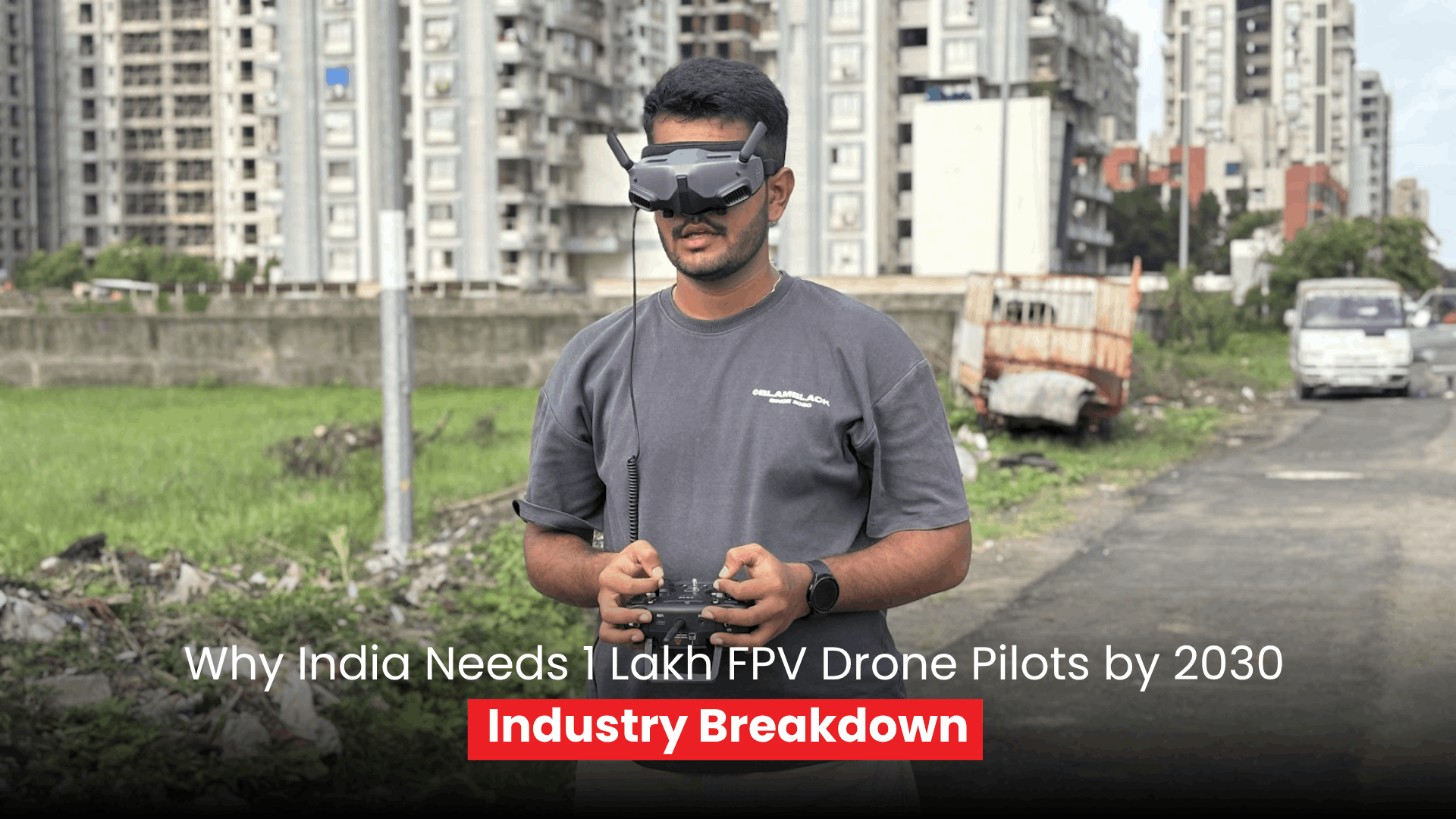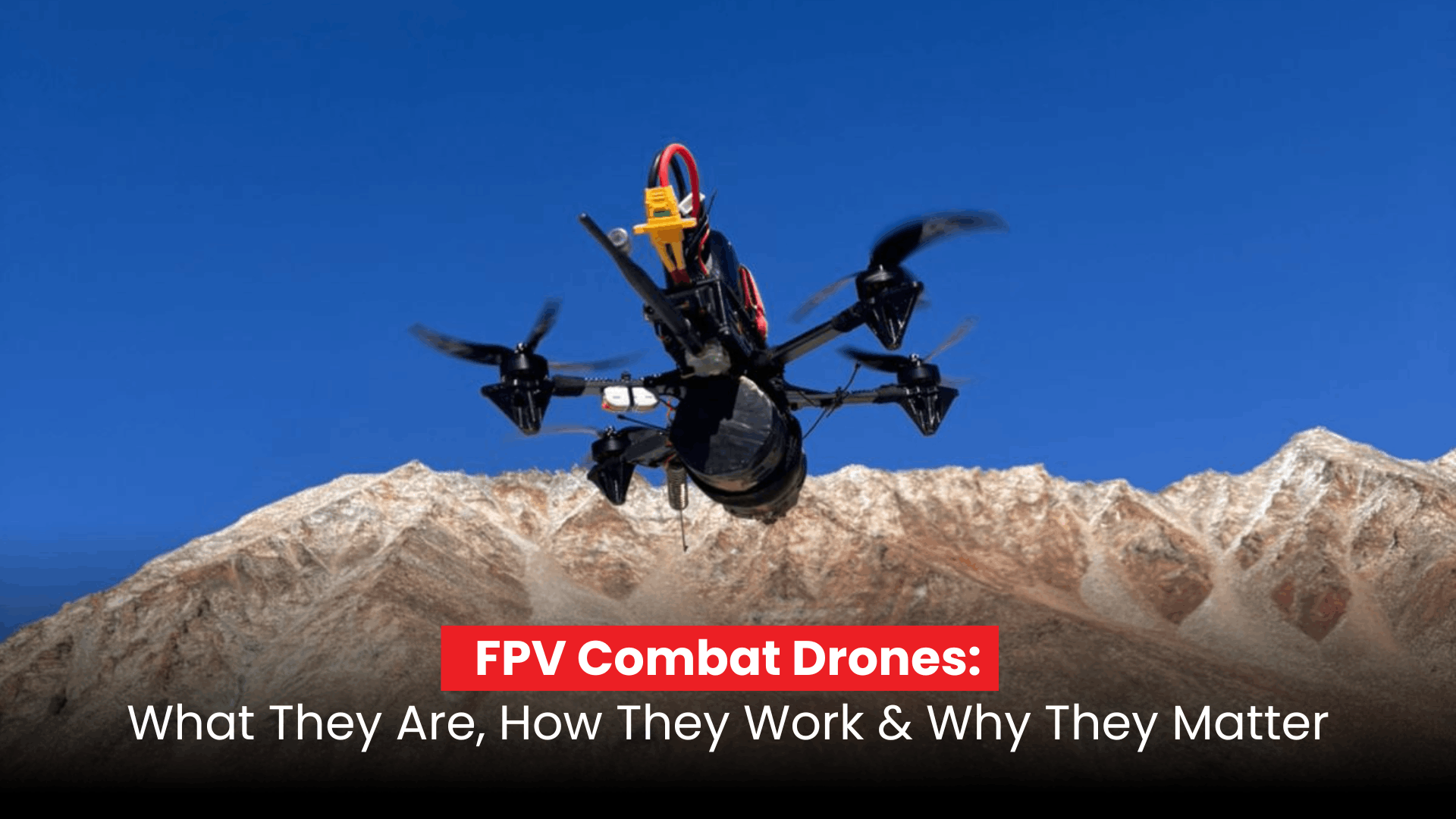

The rise of First Person View drones has reshaped global warfare, and India is witnessing this shift at an unprecedented pace. From border surveillance to precision strike missions FPV drone pilots are now as crucial as traditional ground forces.
What was once a niche skill practiced by hobby flyers has matured into one of the most sought after defence roles across India.
Today every major defence force including the Indian Army Indian Air Force and specialised security agencies is increasing its demand for skilled pilots. They are looking for someone who can operate nimble explosive carrying FPV platforms and advanced reconnaissance drones.

This demand is driven by rapidly evolving threats, modern battlefield challenges and the proven success of FPV systems in conflict zones worldwide.
In this detailed guide we explore why defence units urgently need FPV drone pilots, the exact skills required, the training pathway, and the future career scope for Indian youth.
The Strategic Importance of FPV Drone Pilots in Modern Indian Defence
FPV drones are now a frontline asset. They offer exceptional advantages for Indian forces protecting long borders, dense forests, mountain terrain and sensitive zones.

Human soldiers carry enormous risk in these environments while FPV drones can carry out the same mission with far greater accuracy and safety.
Why FPV pilots are becoming mission critical
-
FPV drones can strike targets with extreme precision reducing collateral damage
-
They help prevent soldier casualties during high risk missions
-
They are significantly more cost efficient than traditional guided missiles
-
FPV attack drones are now widely used by global military forces
-
Rapid deployment makes them ideal for sudden conflict escalation
-
Real time video feed provides better situational intelligence to commanders
Situations where FPV pilots play a decisive role
-
Border infiltration detection
-
Anti terrorism and counter insurgency operations
-
Kamikaze style strikes on enemy bunkers and weapon systems
-
Surveillance in dense jungles and high altitude terrain
-
Urban warfare scenarios where normal drones struggle
-
Training support for special forces
India has already begun large scale adoption of FPV systems after successful field demonstrations by private players and defence R and D teams. As procurement expands the requirement for trained manpower grows even faster.
Also read: Elevate v1 surveillance drones: Features, capabilities, and real world use cases
The Skill Set Required to Become an FPV Drone Pilot
Operating an FPV drone in a defence mission is far more demanding than recreational flying. Pilots must handle speed obstacles, dynamic environments and stress while making split second decisions.

Below are the core skills Indian defence units expect from FPV drone pilots:
1. Strong Manual Flying Expertise
FPV drones move at high speeds and require reflex driven control. Precision in tight spaces is essential.
Key abilities include:
-
Quick throttle and directional management
-
Smooth cornering around obstacles
-
Maintaining stability in unpredictable wind conditions
-
Rapid recovery during signal loss or temporary blackout
2. Deep Understanding of Drone Hardware
Pilots must know their aircraft inside out.
This includes:
-
Battery management
-
Flight controllers and tuning
-
Motor power distribution
-
Fail safe protocols
-
Camera and antenna configurations
-
Payload management for explosive or surveillance attachments
3. Mission Intelligence and Tactical Decision Making
Unlike recreational FPV flying, defence flying requires situational awareness.
Pilots must:
-
Study enemy movement patterns
-
Understand terrain strategy
-
Predict possible defensive responses
-
Work closely with ground units
-
Make tactical choices within seconds
4. Stress Management and Mental Endurance
Real missions involve pressure.
Pilots train to:
-
Stay calm when the signal drops
-
Maintain accuracy during combat
-
Handle overload from rapid movement visuals
-
Avoid panic if the drone is targeted or jammed
5. Team Collaboration
FPV pilots often operate as part of a ground team.
Collaboration includes:
-
Working with mission commanders
-
Coordinating with field units
-
Sharing real time intelligence
-
Following communication protocols
6. Safety Compliance and Regulations
Even defence operations require strict protocols to avoid friendly damage or equipment loss.
Also read: Experience insideFPV’s 7-day drone training program
Training Path: How Indian Youth Can Become FPV Drone Pilots
Until recently FPV flying in India was limited to racing communities and hobby groups. But now structured programmes are being created for defence readiness. Training is no longer informal. It follows a clear pathway.

Stage One: Introductory Skills on Simulators
Simulators allow trainees to perfect muscle memory without crashing real aircraft.
Benefits include:
-
Cost free learning
-
Unlimited practice sessions
-
Familiarity with common flight scenarios
-
Error correction in real time
Stage Two: Basic Practical Flying
Once comfortable with simulation pilots begin flying small practice FPV drones.
Focus areas:
-
Take off and landing
-
Loops and turns
-
Target locking
-
Maintaining stable footage
Stage Three: Advanced FPV Combat Flying
Defence training introduces real mission scenarios.
Pilots learn to:
-
Fly close to the ground for stealth
-
Navigate tight gaps
-
Perform real time target engagement
-
Execute advanced manoeuvres at high speed
Training is often conducted in controlled ranges with realistic environments that mirror border zones and urban layouts.
Stage Four: Hardware Handling and Repair Training
Pilots must not rely on engineers in the field. They learn:
-
Motor replacement
-
Frame reinforcement
-
Camera calibration
-
Battery safety
-
Tuning for flight stability
Stage Five: Mission Planning and Tactical Development
This is the most critical stage.
Trainees learn:
-
Terrain reading
-
Attack and return patterns
-
Emergency procedures
-
Target analysis
-
Communication guidelines
Stage Six: Assessment and Certification
Upon completion trainees undergo:
-
Practical flying tests
-
Hardware tests
-
Tactical knowledge tests
-
Stress management evaluations
Certification ensures pilots meet defence readiness standards.
Also read: How India plans to rule the skies with 100,000 drones
Career Opportunities for FPV Drone Pilots in Indian Defence
As India pushes for defence modernisation FPV pilots are becoming one of the most valuable new generation roles.

Where FPV drone pilots are needed
-
Indian Army infantry units
-
Special Forces teams
-
Assam Rifles and BSF border divisions
-
Counter terrorism squads
-
Air Force drone response units
-
Defence Research and Development teams
-
Private defence companies manufacturing FPV systems
Roles FPV pilots can take up
-
FPV attack drone operator
-
Reconnaissance FPV specialist
-
Drone technician
-
Mission planning assistant
-
Field support pilot
-
Training instructor for new recruits
-
System integration specialist
Long term career advantages
-
High relevance as drone warfare becomes the global standard
-
Growing demand across defence and private defence tech firms
-
Opportunity to work on advanced indigenous drone systems
-
Competitive pay scales depending on the unit
-
Strong long term career stability
Why More Indians Should Consider This Career
FPV drone piloting is a rare mix of technology skill adventure and national service. Young Indians with interest in drones, robotics gaming simulation or military service are perfectly positioned for this field.
Benefits of choosing this path
-
Meaningful contribution to national security
-
Opportunity to work with cutting edge indigenous technologies
-
Growing industry with immense future scope
-
Skill set recognised across multiple defence and civilian segments
-
Clear training pathways supported by specialised institutions
Frequently Asked Questions
What skills do I need to become an FPV drone pilot for defence?
You need strong manual flying control, quick decision making, and a basic understanding of drone hardware. Even beginners can reach defence standards with a focused simulator and hands on training.
Are FPV drone pilots in demand in Indian defence forces?
Yes. The Indian Army and security units are rapidly increasing FPV drone use. Skilled FPV pilots with proper training and certifications have a clear advantage during recruitment.
Can civilians train first and then move into defence FPV roles?
Yes. Many pilots start as civilian learners. After gaining advanced skills and certifications they can apply for defence roles or join companies working directly with the armed forces.